
DDoS – Did You Know? DDoS Attacks Explained
 You’ve probably heard the term DDoS attack. This type of cyber threat has been a popular strategy for cyber attackers for many years, but do you know what DDoS is?
DDoS attacks have evolved alongside the internet and technology. These threats have grown over time, so it is crucial to stay educated about the latest attacks and take the necessary steps to prevent them.
Let’s explore the world of DDoS attacks and learn how to empower ourselves to stay one step ahead in cybersecurity.
What are DDoS Attacks?
A DDoS or distributed denial of service attack is a type of cyber-attack that floods a company’s network infrastructure with traffic. If websites begin to buffer, error messages start to load, and your internet circuit is maxed out, this could be a sign that your organization may be the victim of an attack.
Attacks come from individuals finding weaknesses in the software or depleting bandwidth. DDoS attacks can delay communication and prevent employees from accessing important information. Understanding the basics of DDoS attacks can help prevent them in the future.
Click here to watch a short video about DDoS attacks.
What is the Difference Between DoS and DDoS?
DoS, or denial of service attack, is a very broad category, including anything that prevents a service from working properly or prevents a user from accessing a server. DoS can include single-source volumetric attacks, DNS poisoning, radio jamming, and application layer exploits. Even physical intervention, such as unplugging a router, can be considered a DoS attack.
DDoS is a more specific term referring to the use of multiple devices across the internet, such as a botnet, to all cooperate in a DoS attack. Certain sites might experience a DDoS during busy periods, such as popular product launches. At these times, a vast number of legitimate users, instead of a botnet, overwhelm the capabilities of the site. This is not an attack, but it is still a DDoS.
What are Botnets?
Botnets are often used in DDoS attacks. They are created by infecting computers with malware, which allows attackers to control devices remotely through computers on the infected network.
Three Types of DDoS Attacks
Volumetric
Volumetric is the most common type of DDoS attack. A targeted organization will receive unwanted traffic from devices compromised by botnets. These attacks will exploit the weaknesses of a network’s infrastructure. It seeks to overwhelm the network’s capacity and can block staff from accessing their information.
Application-Layer
Application or Layer 7 attacks can negatively impact an application’s ability to communicate with other applications on different computer systems and networks. Its goal is to disrupt applications or services by exploiting weaknesses in the application layer. This could hinder communication by preventing users from sending or receiving messages.
Protocol
Also known as network layer attacks, protocol attacks can negatively impact an organization’s TCP/IP, DNS, and ICMP protocols. These protocols are responsible for communication between devices and their network, resulting in network downtime, data theft, or system compromise.
Network Infrastructure is a Key Part of Defense
Securing network infrastructure is key to defending against DDoS attacks. This strategy requires a multi-layered approach to protecting subscriber data, which can include regular testing, network segmentation, load balancers, and content delivery networks.
The Cybersecurity & Infrastructure Security Agency provides multiple recommendations that organizations can follow to secure network infrastructure.
OneNet Provides DDoS Mitigation for Subscribers
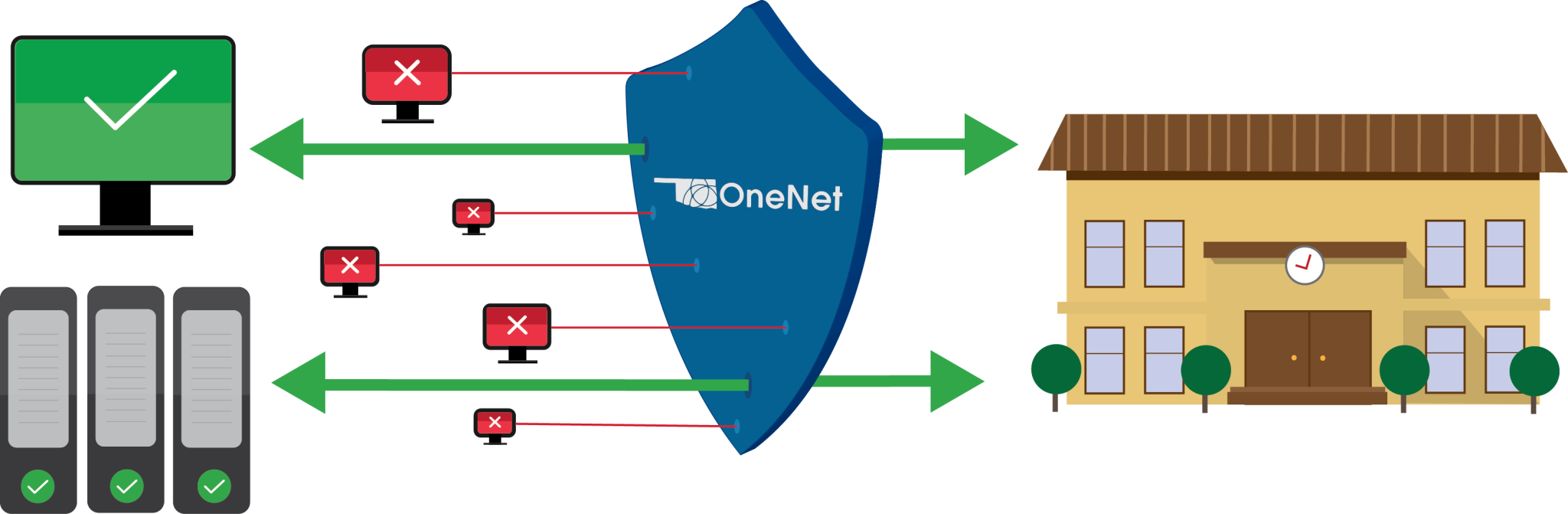
OneNet provides DDoS mitigation for our internet subscribers at no additional cost. OneNet’s DDoS solution provides mitigation without compromising subscribers’ internet service. Real-time traffic alerts and comprehensive analysis tools provide visibility into network activity, ensuring a proactive response.
DDoS Mitigation in K-12 Schools
State testing season can be stressful for teachers, students, and their school’s virtual network. These periods are known for their high traffic and activity, so regular mitigation becomes necessary. OneNet’s strategies and protective security controls help schools detect DDoS attacks before they happen.
Questions about DDoS mitigation? Email us at info@onenet.net.